
Cast iron cookware is celebrated for its durability, heat retention, and naturally non-stick surface. But behind its performance lies a vital process: seasoning. Without proper seasoning, cast iron can rust, stick, and deteriorate. With the right seasoning process, however, your cookware can become an heirloom passed down through generations.
In this comprehensive guide, you’ll learn everything you need to know about Cast Iron Seasoning Process—from the basics to expert techniques.
What is Cast Iron?
Cast iron is a type of cookware made by melting iron and pouring it into a mold. The result is a thick, heavy, and strong pan, pot, skillet, or griddle that distributes heat evenly and maintains it for a long time.
Unlike modern non-stick cookware, cast iron contains no synthetic coatings. Its cooking surface becomes naturally non-stick through the seasoning process—a layer of polymerized oil that bonds to the metal.
Key qualities of cast iron cookware:
- Excellent heat retention
- Natural non-stick (when seasoned properly)
- Extremely durable
- Oven, stove, and even campfire safe
- Can last for generations with proper care
What is Seasoning in Cast Iron?
Seasoning is the process of coating the surface of cast iron cookware with oil and heating it until the oil polymerizes—that is, it turns into a hard, smooth layer bonded to the metal.
This layer protects the pan in three ways:
- Prevents Rust: Bare iron rusts easily. Seasoning provides a barrier.
- Non-Stick Surface: The more you cook with it, the better it gets.
- Improves with Use: Each time you cook with oil, the seasoning strengthens.
Over time, a well-seasoned pan will develop a shiny black finish known as a patina, which is smooth, slick, and ideal for all kinds of cooking—from eggs to steak.
Tools You Need for Seasoning
Before we get into the process, here’s what you’ll need:
- Cast iron cookware (new or used)
- Neutral oil with a high smoke point (flaxseed, grapeseed, canola, vegetable)
- Oven or stovetop
- Paper towels or lint-free cloth
- Aluminum foil or baking tray (for oven use)
- Optional: Steel wool or scrub brush (for restoring old pans)
When Should You Season Your Cast Iron?

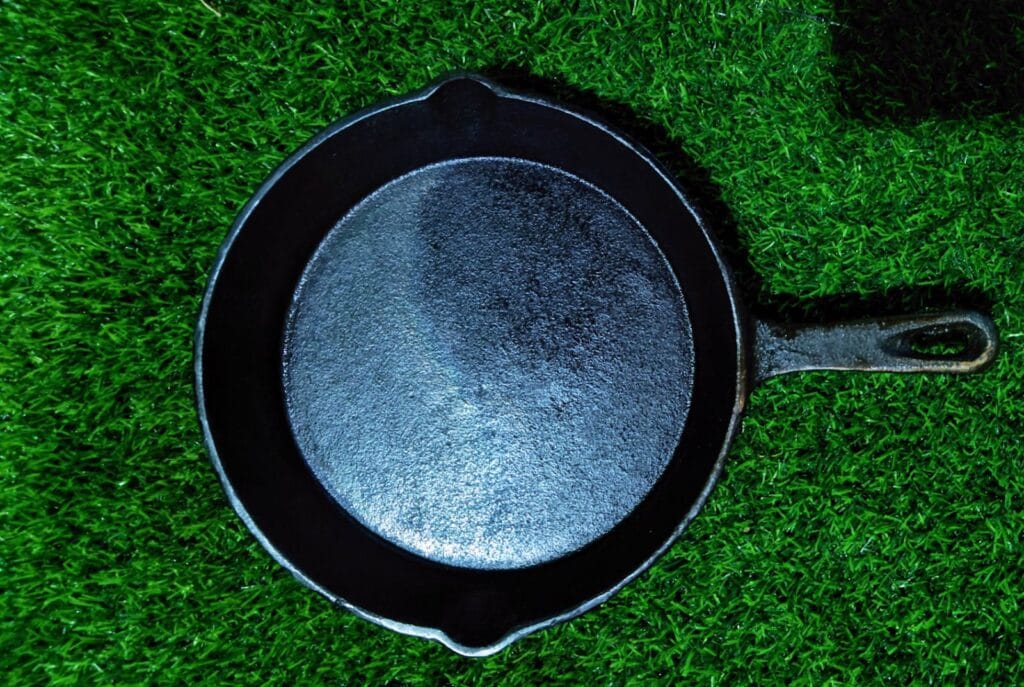
You should season your cast iron cookware when:
- It’s brand new (factory pre-seasoning is often not enough)
- You’ve scrubbed off rust or burnt-on residue
- Food starts sticking more than usual
- You notice dull, grey, or rust-colored spots
- You want to enhance the non-stick layer further
Step-by-Step Cast Iron Seasoning Process
Step 1: Clean the Pan
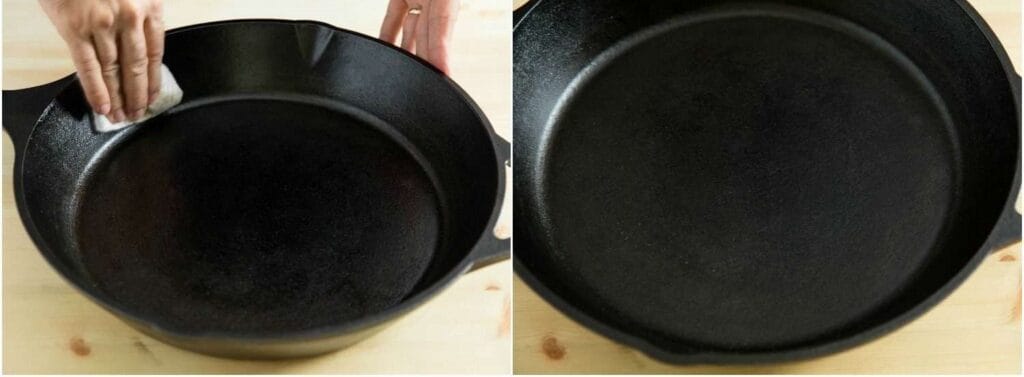
If your pan is brand new, wash it with warm soapy water to remove factory residue. This is the only time soap is recommended. If it’s old or rusty, scrub it with steel wool until smooth.
Rinse thoroughly and dry immediately—cast iron can rust within minutes of being wet.
Tip: Place it on the stove on low heat for a few minutes to evaporate any leftover moisture.
Step 2: Apply Oil
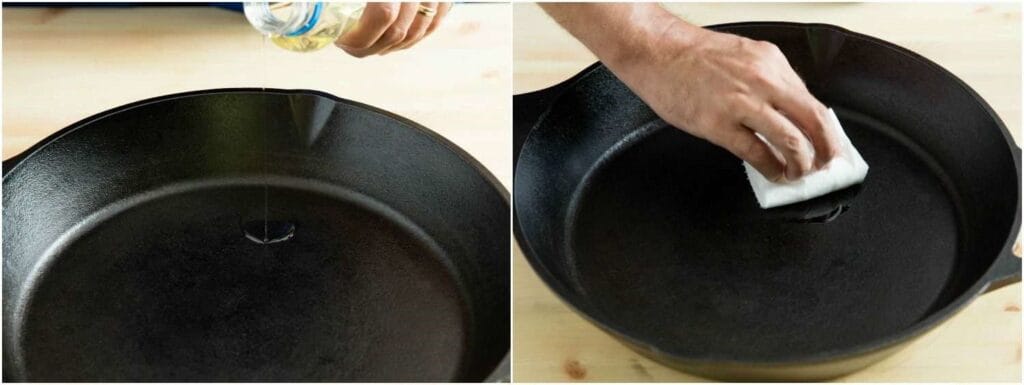
Use a small amount of oil—just a teaspoon or so.
Rub the oil over every surface of the pan using a paper towel:
- Cooking surface
- Exterior
- Bottom
- Handle
Then, use a clean paper towel to wipe off the excess oil until it looks almost dry. If it’s shiny or dripping, you’ve used too much. Excess oil leads to sticky buildup instead of a hard seasoning layer.
Best oils to use:
- Flaxseed oil (most recommended for polymerization)
- Grapeseed oil
- Canola or vegetable oil
- Avocado oil
Avoid olive oil or butter, as they have low smoke points and will burn.
Step 3: Heat It (Oven Seasoning Method)
This is the most effective way to build a strong, even seasoning layer.
Oven Method:
- Preheat your oven to 450°F–500°F (230°C–260°C).
- Place aluminum foil or a baking sheet on the lower rack to catch oil drips.
- Put the oiled pan upside down on the top rack.
- Bake for 1 hour.
- Turn off the oven and let the pan cool inside.
Repeat this process 2 to 3 times for best results. Each layer strengthens the seasoning.
Step 4: Optional – Stovetop Method
If you don’t have an oven or want a quicker method:
- Place the oiled pan on medium heat.
- Heat until it starts to lightly smoke (5–10 minutes).
- Turn off the heat and let cool.
- Repeat 2–3 times.
While not as thorough as oven seasoning, stovetop seasoning can help refresh the surface between full seasonings.
Daily Maintenance for Seasoned Cast Iron
Once your pan is seasoned, regular use and cleaning will keep it in top shape.
After Each Use:
- Wipe out food and oil with a paper towel.
- Rinse with hot water (no soap).
- Scrub gently with a brush if needed.
- Dry completely.
- Rub in a few drops of oil and heat briefly to protect the surface.
Important: Never leave your pan wet or soak it in water.
Re-Seasoning a Damaged or Rusty Pan
If your pan has:
- Rust spots
- Sticky buildup
- Dull or grey patches
- Food that won’t stop sticking
…it’s time to re-season.
How to Restore:
- Scrub the pan thoroughly with steel wool until bare metal shows.
- Wash and dry immediately.
- Follow the full seasoning steps above (apply oil, bake for 1 hour, repeat).
You can always bring cast iron back to life—even one that looks ruined.
Common Myths About Cast Iron Seasoning
❌ Myth 1: You can’t use soap
✅ Fact: You can use soap once or twice—especially for a deep clean before seasoning. Just avoid it daily.
❌ Myth 2: You must season after every use
✅ Fact: Not necessarily. A light coat of oil after cleaning is enough unless food starts sticking.
❌ Myth 3: Black = Dirty
✅ Fact: The black surface is a healthy patina, not dirt. It’s what makes your cast iron non-stick.
FAQ: Cast Iron Seasoning
How often should I season my cast iron?
If you use it regularly, do a deep seasoning every few months. If you rarely use it, season it before storage and again before heavy use.
What happens if my pan gets sticky?
Sticky surfaces come from too much oil during seasoning. Reheat the pan to burn off the excess, or scrub it clean and start over.
Can I cook acidic foods (like tomatoes) in cast iron?
Occasionally, yes. But acidic foods can strip seasoning, so avoid frequent use until your pan is deeply seasoned.
Is rust the end of my pan?
No! Rust is easily removed. Scrub it off, dry, and re-season. Your pan will be good as new.
🏁 Final Thoughts: Your Cast Iron is Only as Good as Its Seasoning
Seasoning your cast iron cookware isn’t just a chore—it’s an essential part of owning one. It’s what turns a simple piece of metal into a non-stick, rust-proof cooking powerhouse that gets better the more you use it.
Whether you’re frying eggs, baking cornbread, or searing steak, a well-seasoned cast iron pan performs like no other. Invest a little time in seasoning now, and enjoy decades of delicious meals.